The Pan American Development Foundation (PADF) has launched Blue Hispaniola, a three-year binational project designed to strengthen sustainable fisheries, expand coastal livelihoods, and improve marine resource management along the northern coast of Haiti and the Dominican Republic.
Funded by the OCEAN Grants Programme, the project will run from 2025 to 2028 and bring together six local organisations across both countries to create a blue economy corridor that connects communities, promotes responsible use of marine resources, and expands economic opportunity for people whose livelihoods depend on healthy marine and coastal resources.
The official launch took place on 15 July 2026 at the CODEVI Free Zone, an economic hub located along the northern border between Haiti and the Dominican Republic, symbolising the project’s cross-border ambition and its focus on shared prosperity.
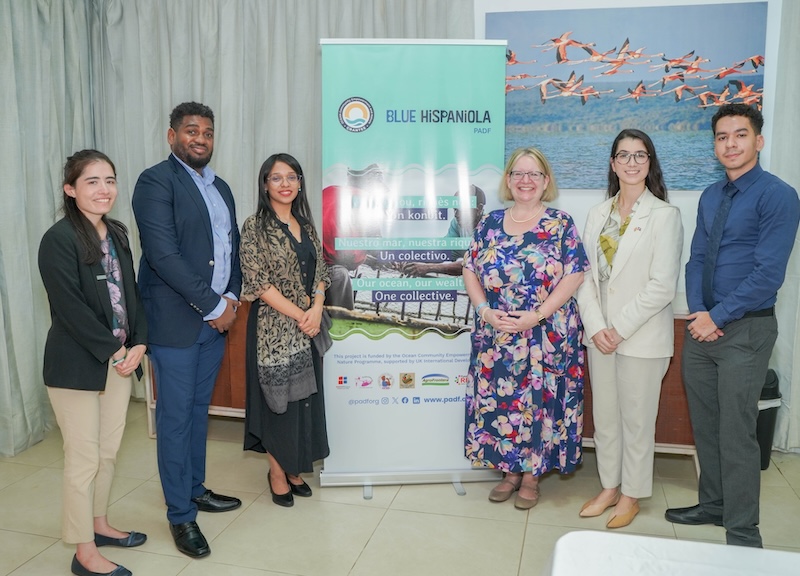
Blue Hispaniola project representatives and stakeholders attending the launch event. Image credit: Victor Lemoine
“Blue Hispaniola is about turning shared waters into shared opportunity. When two countries share the same coastline, the smartest investment is in the people who depend on it most – the local organisations, fisher communities, and women whose livelihoods are tied to the sea,” said Katie Taylor, Executive Director of PADF. “This initiative will reach more than 8,350 people and improve management of over 92,250 hectares of marine ecosystems, proving that protecting ocean health and growing coastal economies aren’t trade-offs – they’re multipliers. Blue Hispaniola is a model for what the Caribbean’s blue economy can look like when it’s rooted in local leadership and shared ambition.”
The Blue Hispaniola Project will work with local partners in Haiti, including Fondation Essence-Elle, Mouvement Paysan pour le Développement de Paulette, Groupe Féministe Révolté D’Haïti, and Haiti Efficace, as well as partners in the Dominican Republic, including AgroFrontera and Fundación REDDOM. Together, they will strengthen fishers’ organisations, expand training and market access, support alternative economic opportunities, and elevate the leadership of women in fisheries-related value chains.
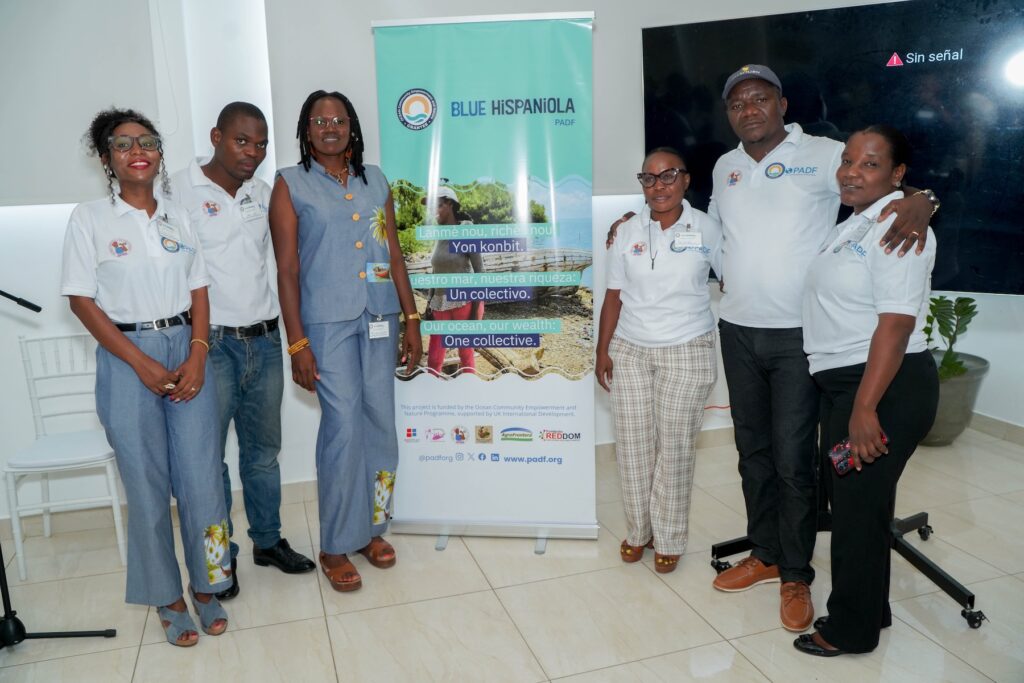
Blue Hispaniola project partners attending the launch event. Image credit: Victor Lemione
Northern Hispaniola’s coastal communities face mounting pressure from overfishing, declining fish stocks, habitat degradation, and limited access to economic opportunities. Women working in small-scale fisheries and related value chains play an essential role in household income, food systems, and local economies, yet often have fewer opportunities to access training, resources, markets, and formal decision-making spaces.
Blue Hispaniola aims to respond directly to these challenges with measurable, community-driven impact. The project will directly support 8,350 community members, with at least 50% women, and improve the management of 92,250 marine hectares across the binational corridor. Through this work, the initiative will help communities protect mangroves, coral reefs, fisheries, and other coastal ecosystems that are vital to food security, community resilience, and long-term economic opportunity.
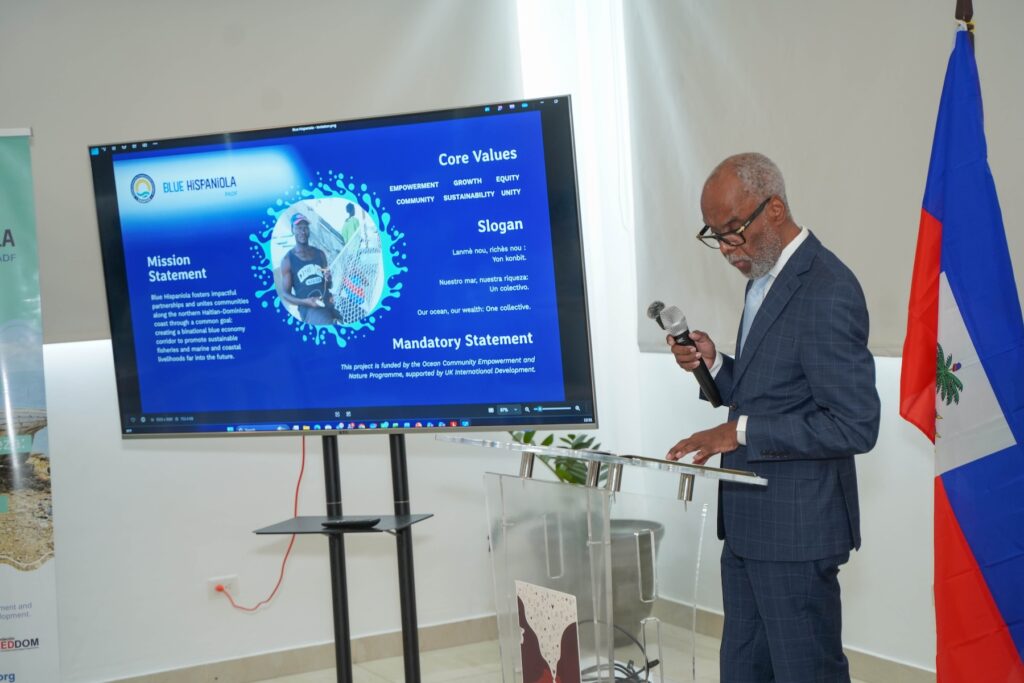
Dr. Lionel Isaac, Project Leader, PADF Haiti, introducing the project during the launch event. Image credit: Victor Lemoine
“Blue Hispaniola shows how locally led action can strengthen marine protection while expanding economic opportunity for coastal communities. We are proud to support a project that works across borders to improve fisheries management, protect critical coastal ecosystems, and reduce poverty for people whose livelihoods depend on healthy ocean resources,” said Billy Curryer, Programme Manager for OCEAN.
“The United Kingdom is proud to support this work through the Blue Planet Fund OCEAN Grant because we know that ocean protection is not an abstract issue. It is about food, jobs, safety, dignity, and the future of coastal communities. Blue Hispaniola is a powerful example of how environmental protection and economic opportunity can go hand in hand.” said H.E. Dr. Carol van der Walt, British Ambassador to the Dominican Republic and Ambassador-Designate to Haiti. “The waters, fisheries, coral reefs and coastal habitats shared by the Dominican Republic and Haiti form a single interconnected ecosystem. Protecting these resources requires practical cooperation, good coordination and trust built through work on the ground.”
By combining fisheries management, livelihood development, women’s economic participation, and binational coordination, the Blue Hispaniola Project represents a practical model for the future of the Caribbean blue economy: one rooted in local leadership, shared resource management, and the sustainable use of marine and coastal assets.
Visit the Blue Hispaniola project page to discover more about this impactful work.