Supporting mangrove restoration and livelihoods
The Sundarbans Mangrove Forest in Bangladesh faces threats such as over-exploitation of resources such as overfishing and illegal woodcutting, pollution, climate change, unregulated tourism and human-wildlife conflict. These pressures have led to a significant decline in ecosystem health, putting the livelihoods of the communities that depend on these precious resources at risk. Faced with uncertainty, many men are migrating to cities for work while women have increasingly turned to fish farming – an industry vulnerable to regular flooding during monsoon season – to provide an income.
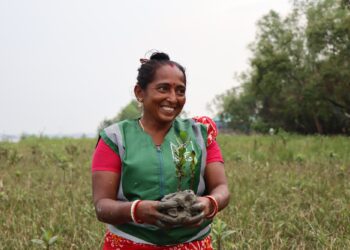
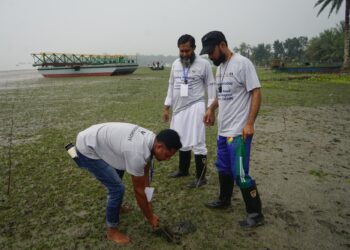
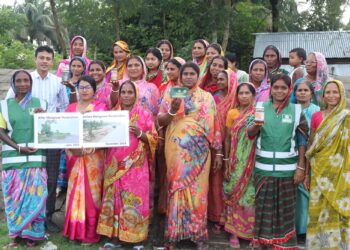
The project is addressing these complex challenges by engaging local communities in mangrove restoration through a community-based approach, with members actively involved in planning, seed collection, nursery management and planting activities. Women’s groups are also being trained to produce and market valuable mangrove-based products – such as pickle, molasses, honey, and tea – providing them with opportunities to create sustainable incomes.
The primary beneficiaries of the project are communities in the most climate-vulnerable coastal villages, including Dacope and Mongla in the Khulna and Bagerhats districts. The project supports the livelihoods of forest-dependent communities, marginal farmers, women and youth, waste pickers, ethnic communities, teachers and students.
To strengthen environmental awareness, teachers, students and youth will participate in mangrove education programmes, helping to disseminate information throughout their communities. At the same time, the capacity of mangrove management stakeholders such as local government officials and community leaders will also be improved through the Community Based Ecological Mangrove Restoration (CBMR) training.
Partner organisation: Mangrove Action Project
Image gallery credit: BEDS Bangladesh