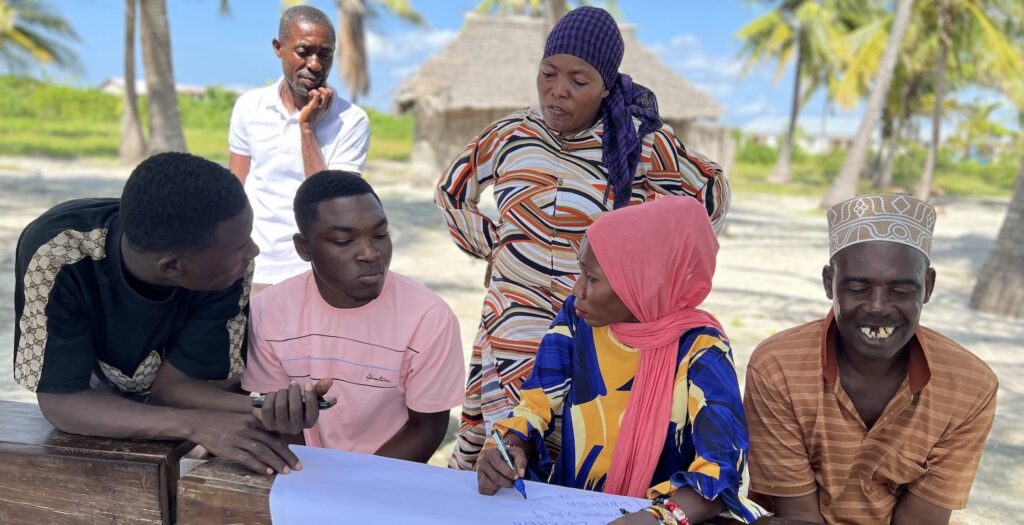
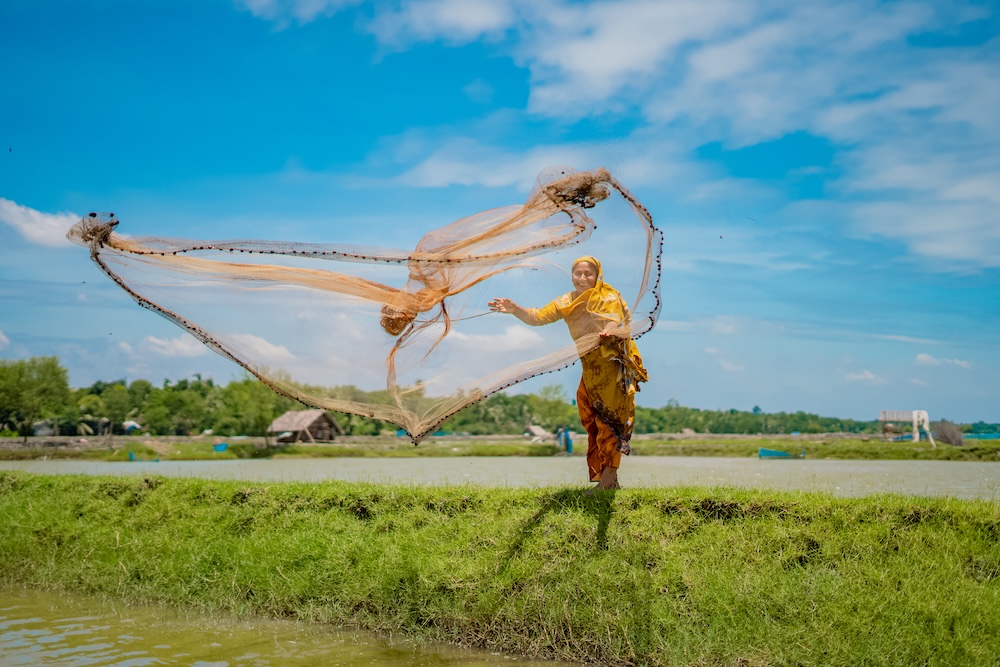
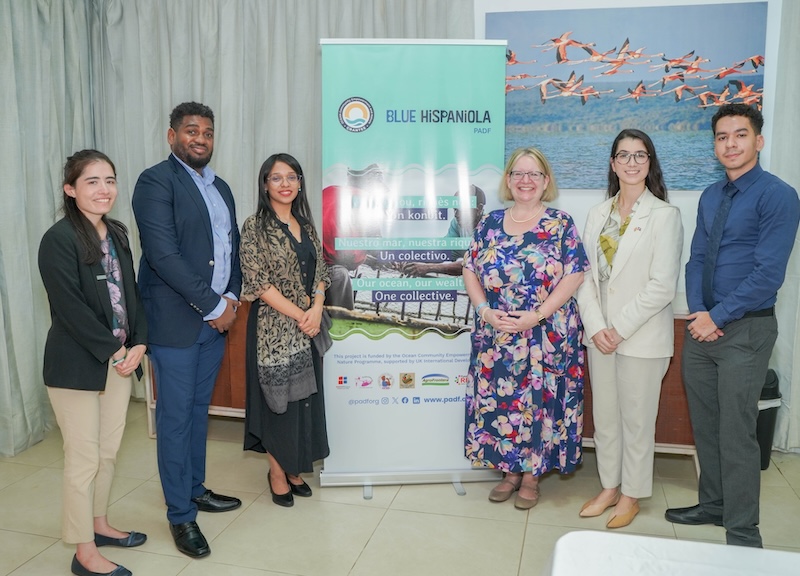
Berikanpreneur, is a social enterprise that is empowering women to create innovative protein products from fish waste. In 2024, it was awarded an OCEAN Community Grant.
Following the project’s completion, we’re reflecting on the achievements, impact and lessons learned.
Berikanpreneur is located in the coastal village of Eretan Kulon, Indramayu, Indonesia, a community that faces numerous challenges, including multidimensional poverty, limited access to education and declining marine ecosystems.
The project supports fishermen’s wives to create and manage their own micro-businesses selling high-protein fish products. By giving a second life to low-value fish waste that would otherwise pollute the marine environment, Berikanpreneur is improving the health of coastal ecosystems while contributing to the long-term economic resilience of women and families in the area.
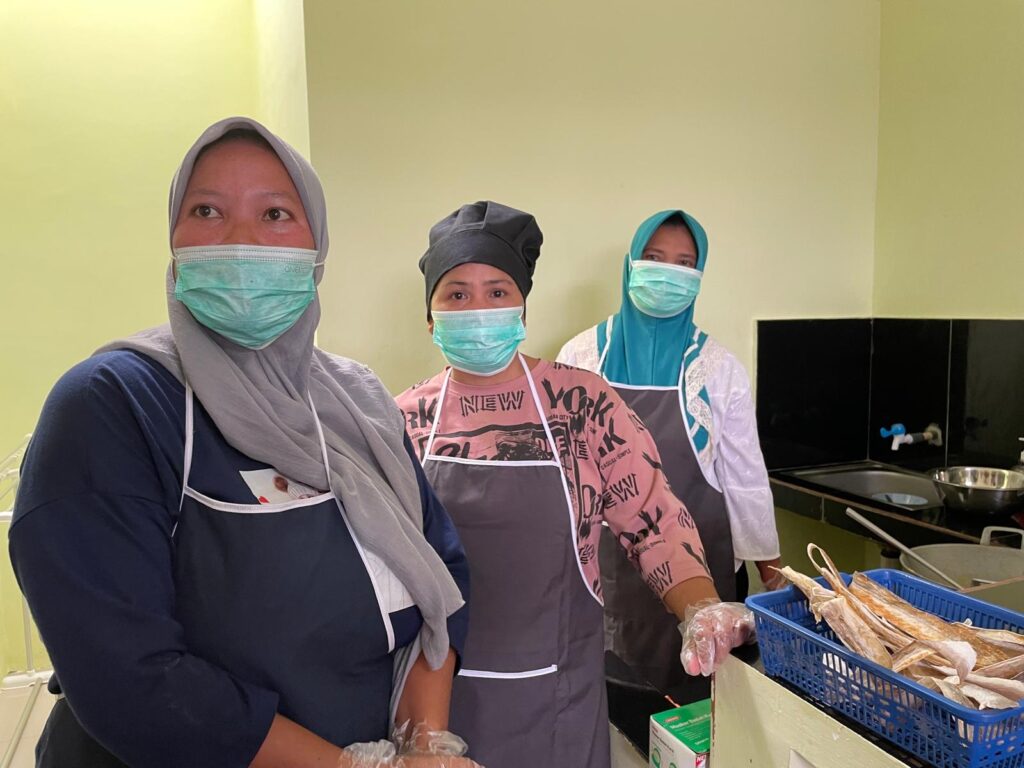
Beneficiaries of the Berikanpreneur project. Image credit – Defra, Berikan
In November 2024, Berikan kick-started their OCEAN-funded project with the following ambitions:
- To train 50 women in business management, marketing and production, including fishermen’s wives, youth, and persons with disabilities;
- To turn 27 kg of fish waste into a high-protein food – a fish skin katsuobushi snack;
- To establish a Berikan Production House – a community-owned facility to produce products safely and consistently.
Empowering women with valuable business and digital skills
Throughout the duration of the project, a total of 75 beneficiaries participated in the Berikanpreneur programme, and 55 are still currently active, meeting the project’s initial goal.
A key element of Berikanpreneur is equipping women and youth from the community with essential skills to enable them to launch and manage their micro-businesses. Over the year, 13 training sessions provided the women with valuable entrepreneurial skills to support them as micro-business owners – including product development, digital marketing, food processing and financial management.
As participants grew in confidence, they began to apply the digital skills they had learned to their small businesses. For example, resellers began promoting their products through digital platforms such as Shopee and social media, experimenting with live streaming and sharing their products online. Overall, a total of 43 online stores were established, representing 86% of all Berikanpreneur resellers.
An influential figure in the community
Ms Rosidah, an influential figure in Eretan Kulon with her own long-standing fish snack business, also serves as a Co-Production House Coordinator for Berikanpreneur and is one of their most successful resellers. She has become a key figure for recruiting, facilitating and mentoring project participants in the community and is deeply motivated to bring about positive change.
She says, “From the beginning, my vision has been to help Eretan Kulon grow, because I truly believe this place is potentially like a hidden pearl waiting to shine.”
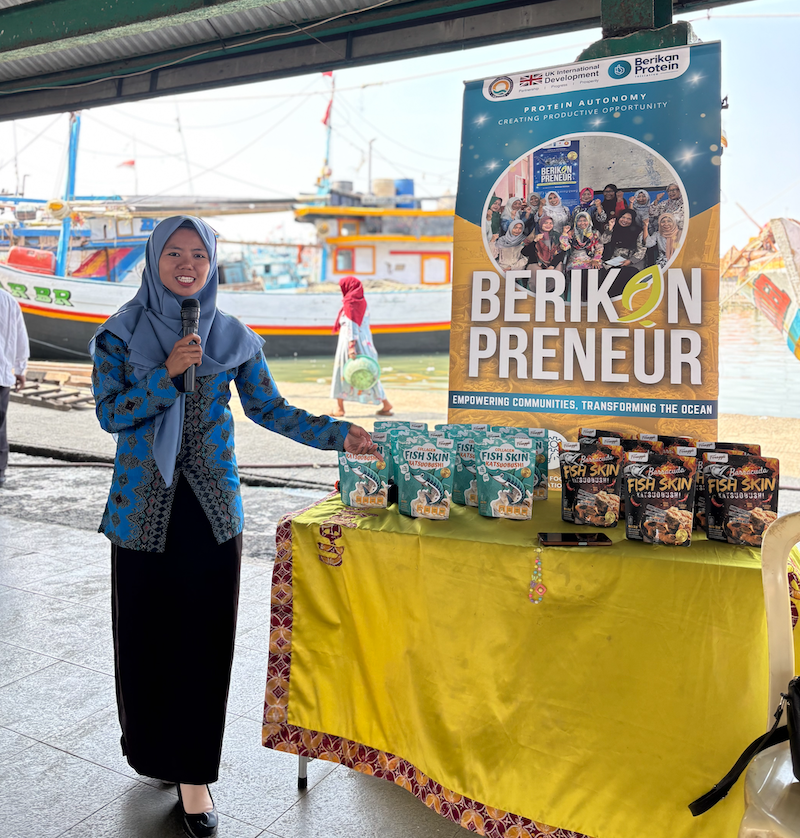
Ms Rosidah selling Berikanpreneur protein snacks. Image credit – Berikan
Leaving nothing to waste
In total, 38 kg of potential fish waste was prevented from entering coastal and marine environments, surpassing the project’s target by 141%. The discarded fish waste was used to develop and market a new, locally inspired product variant to appeal to regional tastes. The new product was created by combining barracuda fish with katsuobushi (smoked skipjack tuna) and the two new flavours ‘original’ and ‘spicy’ received positive feedback from the community.
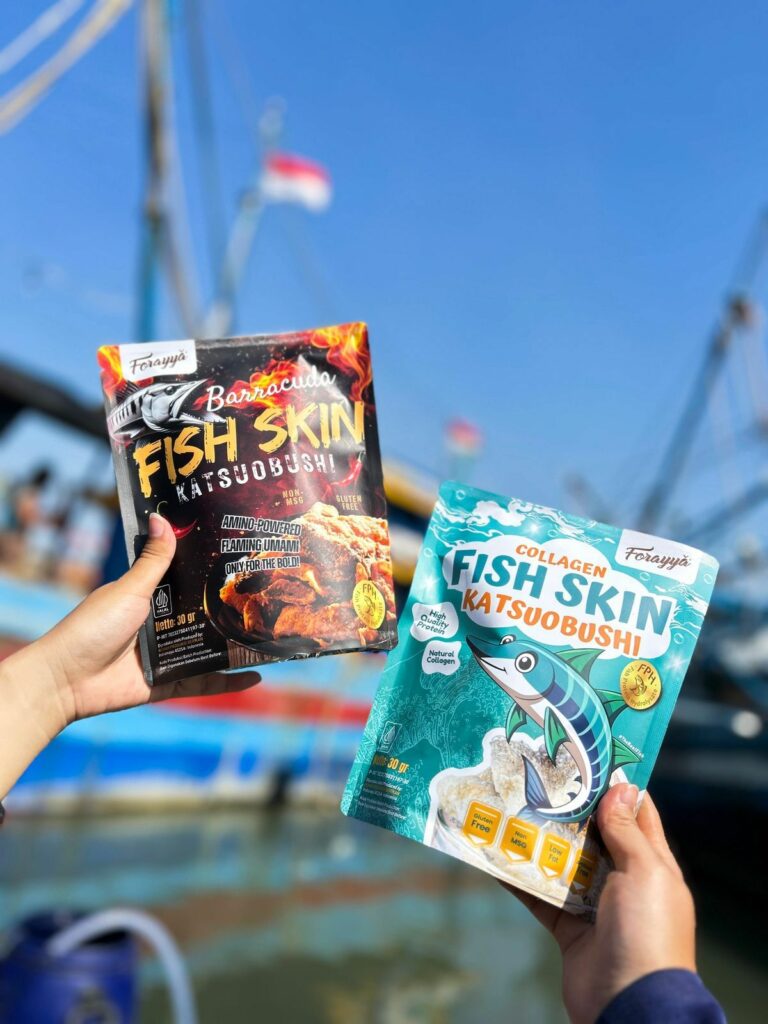
Barracuda and Collagen Fish Skin Katsuobushi products. Image credit – Berikan
Establishing the Berikan Production House
Berikanpreneur successfully established the Berikan Production House (Rumah Produksi Berikan), a small-scale, centralised community production hub. The hub supports the consistent manufacturing of fish skin products, enhances quality control and improves production efficiency. It also generates its own income from online and offline sales. The project supported three individuals with disabilities who were empowered to undertake marketing and promotional activities linked to the production hub, demonstrating an inclusive approach to project participation.
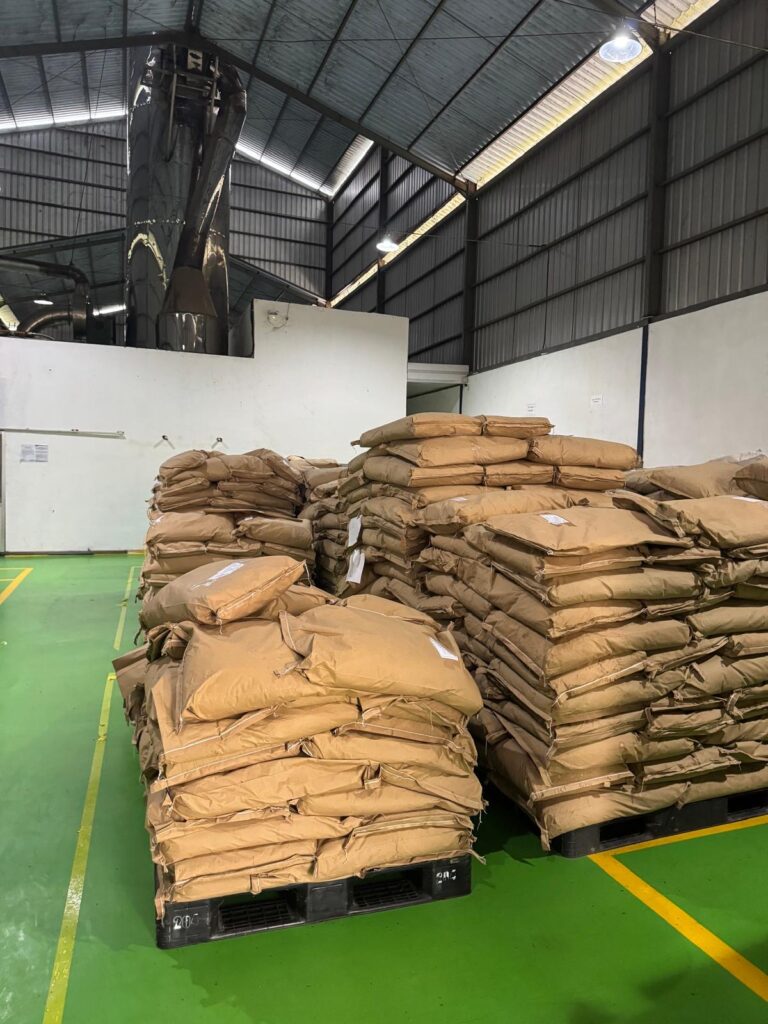
Berikan Production Hub. Image credit – Defra, Berikan
Lessons learned
The dynamic nature of Berikanpreneur meant that challenges were encountered during the project duration but were either managed effectively or learned from. For example, it became clear that the full participation of women in regular training sessions was limited in some cases due to domestic and childcare responsibilities at home. In the future, Berikan is considering creating safe childcare spaces during sessions to allow women to attend sessions more easily.
In addition, digital tools proved to be challenging for many older resellers wanting to grow their micro-businesses online. Berikan responded to this by forming sales groups of mixed ages, allowing the younger generation to share their digital skills with elders. They also furthered their support by offering guidance and monitoring via WhatsApp and livestreaming.
Youth involvement also further yielded positive outcomes. For example, one of the best product packaging concepts was created by a youth participant, highlighting future opportunities for engaging with young people.
Lastly, initial product acceptance in the market proved to be slow. In response to this, the team increased efforts to strengthen their online product promotion, optimised the online marketplace Shopee’s features, and placed products in local exhibitions, which proved to work effectively.
Looking to the future
Although still in its infancy, the community of Eretan Kulon is increasingly engaged with Berikanpreneur, the market is responding positively to their new products, and the Berikan Production House is established and operating smoothly.
The Berikan team is already exploring future plans to continue to grow their meaningful initiative. This includes collaborating with the Indramayu local government, in addition to national CSR programs from state-owned enterprises (BUMN) to strengthen production capacity and scale their proven model to other coastal villages. They will also continue to improve the accessibility of the project for participants of all backgrounds.
We are looking forward to following their inspiring journey!