Planeta Océano is a Peru-based non-profit organisation working to safeguard marine environments. It was awarded a one-year OCEAN Grant in January 2025 to renew community engagement in the conservation of endangered giant manta rays. Read on to learn what the project achieved…
The Tropical Eastern Pacific of northern Peru, specifically the Tumbes region, is a critical biodiversity hotspot and home to the country’s largest population of small-scale fishers.
Despite its ecological importance, the area faces significant challenges, including multidimensional poverty and bycatch of the endangered giant manta ray (Mobula birostris) by artisanal gillnet fisheries.
In 2025, Planeta Océano was awarded a one-year OCEAN Community Grant to support progress towards their long-term goals:
- Support the reactivation of community-based manta ray eco-tourism;
- Scale-up participatory monitoring systems for fishers to report manta ray occurrence;
- Co-design and deliver practical recommendations to address manta bycatch;
- Strengthen local awareness for giant manta conservation.
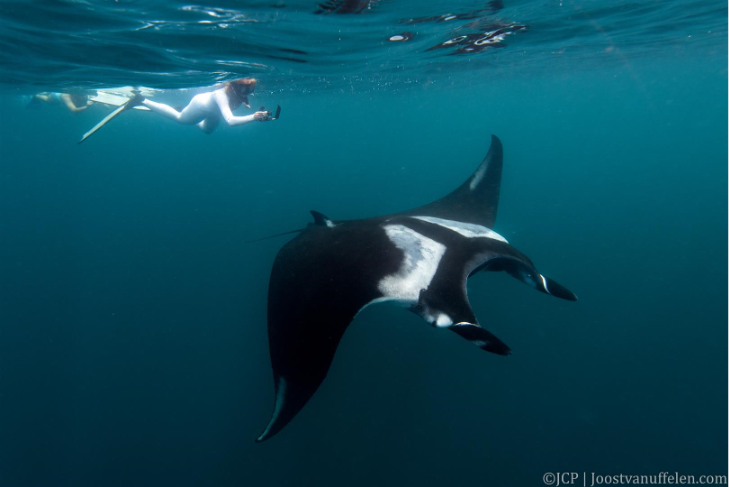
Giant manta ray (Mobula birostris). Image credit: (c) JCP
Empowering young women in ocean conservation
To enhance female participation in its OCEAN project, Planeta Océano welcomed five women through a ‘Manta Ray Women’s Fellowship’ programme. Over the year, the fellows made meaningful contributions, including developing an eco-tourism trip script and supporting the organisation of an ecoclub fair. The experience strengthened their leadership skills in marine conservation and created opportunities to network with experts in the sector. One fellow was trained to use the citizen science app Earthranger¹ to report manta ray and bycatch, and also acquired a formal certification as an on-board observer during excursions.
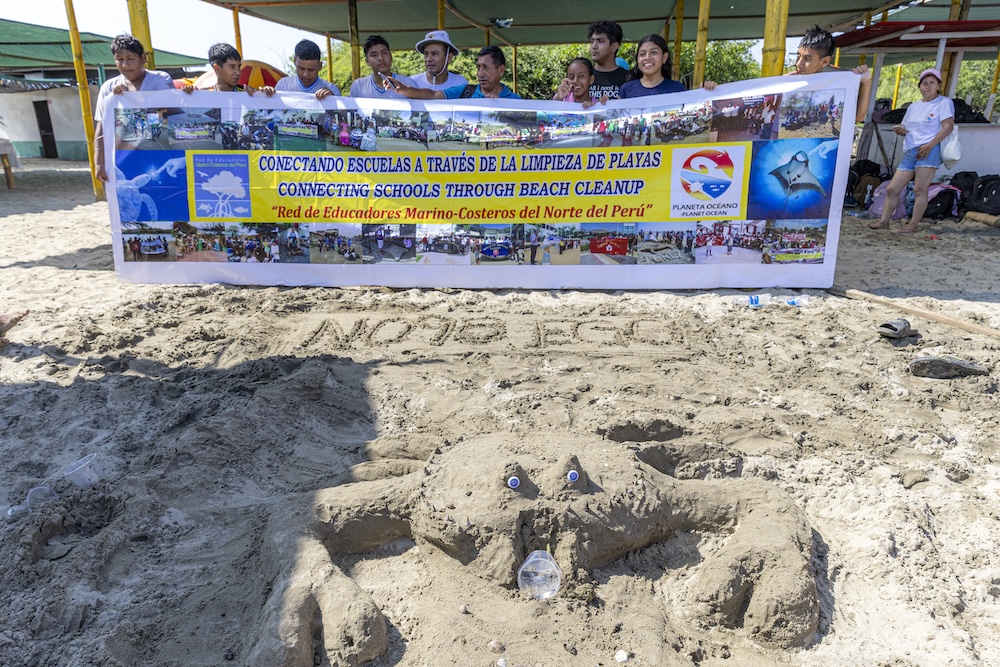
Local youth during a beach cleaning event. Image credit: Planeta Océano
Harnessing technology to report bycatch
During the project, five local fisherfolk were trained to use the EarthRanger app to report sightings of manta rays and other bycatch. To develop their skills, they took part in a dedicated training session on how to use the platform, alongside activities designed to strengthen leadership and deepen knowledge of marine fauna and ecosystem conservation. In addition, the team worked with specialist consultants to improve the collection and processing of EarthRanger reports. This support included a review of existing data workflows and practical recommendations to strengthen future data collection.
Scaling eco-tourism opportunities in Tumbes
A key objective of Planeta Oceano is to scale eco-tourism opportunities in the area to raise awareness of marine biodiversity while providing a sustainable source of income to fishers. With support from OCEAN, an eco-tourism association was officially formed by fifteen local fisherfolk. Plans are now currently underway to purchase a vessel to offer eco-tourism voyages to the public. With this new initiative, it is hoped that members of the association will eventually become conservation ambassadors within the community, participating in sustainable fishing practices and sharing knowledge in the local area.
Increasing community stewardship of marine biodiversity
To strengthen local awareness of the endangered giant manta ray, the team organised a ‘Feria de Ecoclubes’ (ecoclub fair) in Tumbes. During the fair, 345 youth (134 boys and 211 girls) played games and took part in other recreational activities to create an engaging learning environment for students. Participants were encouraged to discover more about Tumbes’ marine species and explore practical ways they can help protect them. The fair received media coverage from CNN en Español and CNN International.
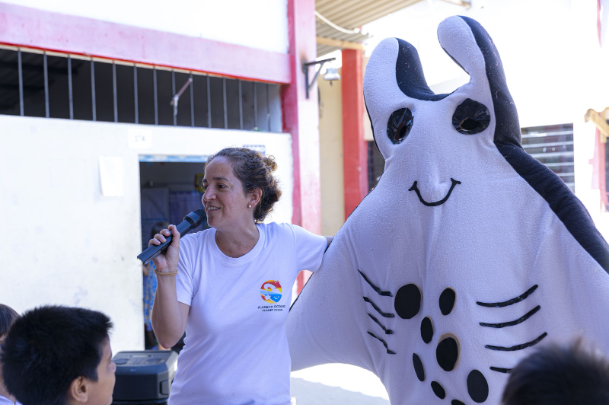
Planeta Océano’s Kerstin Forsberg during the Feria de Ecoclubes. Image credit: Planeta Océano
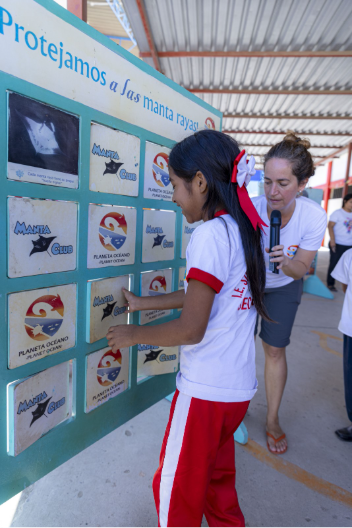
Student playing a manta ray game during the Feria de Ecoclubes. Image credit: Planeta Océano
Another inspiring initiative was the creation of a children’s colouring book based on shark, ray, and marine conservation. The book was created in collaboration with the Shark Stanley campaign and was delivered to 500 students at primary schools in the local area. The colouring book proved to be a fun and creative way to teach young people about the importance of marine conservation and empower the next generation to safeguard the future of local marine biodiversity.
Founder and Director of Planeta Océano, Kerstin Forsberg, also developed a storybook ‘Giant Rays of Hope’ with author Patricia Newman, to shine a light on the lives of giant manta rays in Peru and inspire young readers to take action for their conservation.

Student with the marine conservation colouring book. Image credit: Planeta Océano
To increase awareness of marine conservation with local community educators, the team held an Ocean Literacy training event for 89 teachers in Tumbes. Participants included teachers, assistants, school directors, members of other NGOs, and governmental organisations. The session highlighted the importance of marine and environmental education as a topic that should be integrated across the school curriculum.
Challenges and lessons learned
During the project’s implementation, the community of Tumbes experienced a surge in organised crime and extortions, especially in the artisanal fishing sector. This created a climate of fear and distrust with fisherfolk, which led to communication challenges when working to monitor bycatch. Many individuals became fearful when sharing their phone numbers and were reluctant to answer phone calls when someone from the team tried to communicate with them.
The team mitigated the problem by asking volunteers and fellows in Tumbes to maintain in-person field visits, with a view to rebuild community confidence. In parallel, they maintained constant communication with fishers and all project participants, mostly by calls and messages, from the office in Lima. To rebuild trust, the team regularly checked that project participants felt safe and reminded them to share, if in any moment, providing the bycatch data felt dangerous to them.
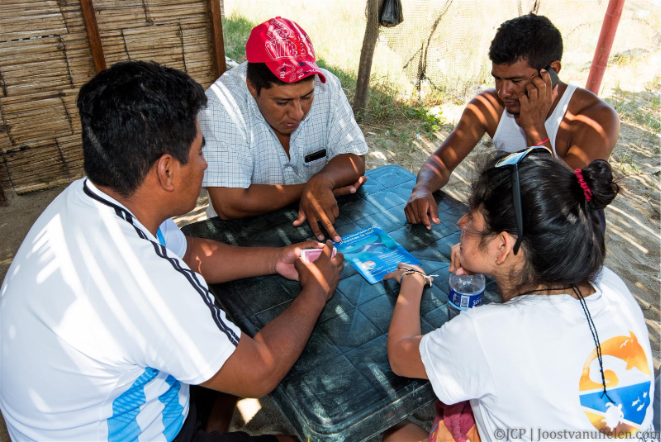
Team members engaging with the local community. Image credit: Planeta Océano
Looking to the future
Although OCEAN funding has ended, Planeta Océano plans to build on the progress made so far. They will continue working with fishers, teachers and other allied organisations to raise awareness and strengthen marine conservation in the area.
Additionally, they are exploring partnerships with other organisations who have similar goals. For example, they are discussing partnership opportunities with the Tumbes regional government and its Marine Action Plan, and they are now part of the Regional Environmental Commission managed by the Tumbes regional government.
Three out of the five female fellows will continue to work with Planeta Océano as volunteers now their fellowship has ended. Finally, the team is currently presenting funding proposals to scale this project’s progress and activities. We look forward to following their impactful journey!
¹ Earthranger is a citizen science platform that allows users to report wildlife sightings and support conservation efforts.