The first OCEAN Global Exchange Series took place virtually from 29 September – 1 October 2026 and brought together OCEAN Grantees, external experts, and the wider development and conservation community for a unique shared learning event.
Over three days, three sessions each explored a distinct theme relating to marine conservation and poverty alleviation. A speaker panel of OCEAN Grantees, OCEAN Expert Committee Members, and Blue Planet Fund Regional Coordinators responded to key questions, sparking rich discussion and practical learnings. Each session then opened to an audience Q&A, allowing the conversation to go deeper on topics of interest.
In Session 1: ‘Conservation and Sustainable Livelihoods’, our panellists explored the connections between marine conservation, sustainable livelihoods and resilient coastal communities. The key takeaways from this insightful session were:
- Build on what communities already do.
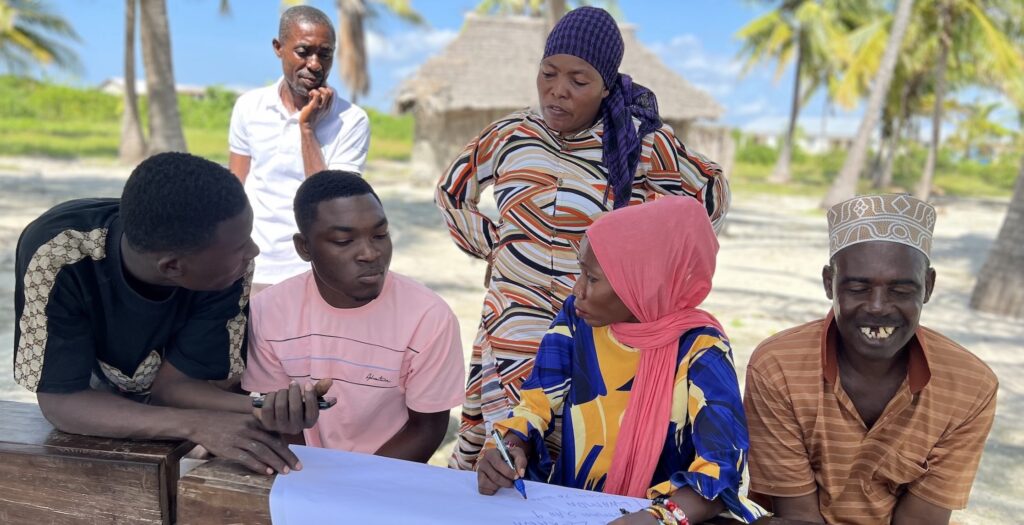
It was emphasised that adding value to existing activities, through better processing, quality, or organisation, is often more effective than introducing new livelihood opportunities. Many communities already have the skills and sometimes existing market links. For example, Smart Youth in Tanzania found that simple drying racks improved the quality of seaweed that women were already farming, leading to better incomes.
- Skills need a market.
Speakers stressed that training generates little income without a confirmed buyer, and that assessing demand and competition first is crucial. It was suggested that collective approaches such as aggregation centres can give buyers confidence and strengthen producers’ bargaining power.
- Strengthen existing local institutions rather than creating parallel ones.
Working through existing structures such as beach management units and savings groups can help communities take ownership of their work and makes it more likely to continue after funding ends. As one panellist highlighted, “people value what belongs to them.”
Session 2, ‘From Community Engagement to Empowerment’, offered valuable examples of how participation can evolve into empowerment and leadership, as well as the evidence that can help recognise this change. The key lessons that emerged from this engaging session included:
- Create safe and separate spaces for quieter voices.
Large meetings can silence women, youth and marginalised groups. Instead, it can be more impactful to create separate, informal consultations that surface ideas that would otherwise be missed. These groups can be brought together over time.
- Close the feedback loop.
It was discussed that people keep participating in something when they can see their input has consequences. That means reporting back on what happened to their ideas and giving them real responsibilities and decision-making roles.
- Look beyond participation numbers for evidence of empowerment.
Meaningful signs of empowerment include communities bringing their own ideas to projects, women and youth influencing decisions and budgets, and groups continuing to negotiate with government and business once a project ends.
During Session 3: ‘Innovation for Impact’, our panellists discussed the importance of co-creation and design, and how these approaches can help ensure that projects respond to community needs. The prominent learnings that came to light from this session were:
- Communities are the real innovators.
The panellists highlighted how the strongest designs come from co-creating with users from the start, including those who might lose out. In the Iluminar el Mar project in Ecuador, for example, local fishers helped to decide the spacing and position of lights on fishing nets, which reduces the bycatch of turtles and sharks.
- Transfer the principle, but adapt to local realities.
An innovation’s core idea may travel well, but the social groundwork should be replicated in each new area. It was emphasised that even neighbouring communities can differ in their practices and attitudes.
- Solve the real barrier, which is often financial rather than technical.
OCEAN Grantee Alner shared that in Jakarta, small shop owners joined a refill scheme much faster once they could take stock on consignment and pay only for what they sold. The key takeaway was that business models that respond to users’ economic realities are key to scaling innovation.
We were delighted to see over 400 participants join us over the duration of the event. One participant said, “This event has been a success; perhaps it will serve as a process for us and our partners to achieve and replicate the positive results that have been accomplished.”
We would like to say a huge thank you to all our presenters and to everyone who contributed to the rich discussions, and we hope to see you all again next year!
OCEAN wishes to thank panellists from the following projects: Prosper Global Smart Youth Action For Ocean Yayasan Mitra Insani Badabon Sangho Bintari Foundation COMRED Pan American Development Foundation Project Zacchaeus Reef Check Malaysia Mare Nostrum Foundation BEDS Bangladesh Sea Women of Melanesia ZSL Alner
Find out more about the event here.
Image credit: Action for Ocean